How Earth Made Us - Season 1
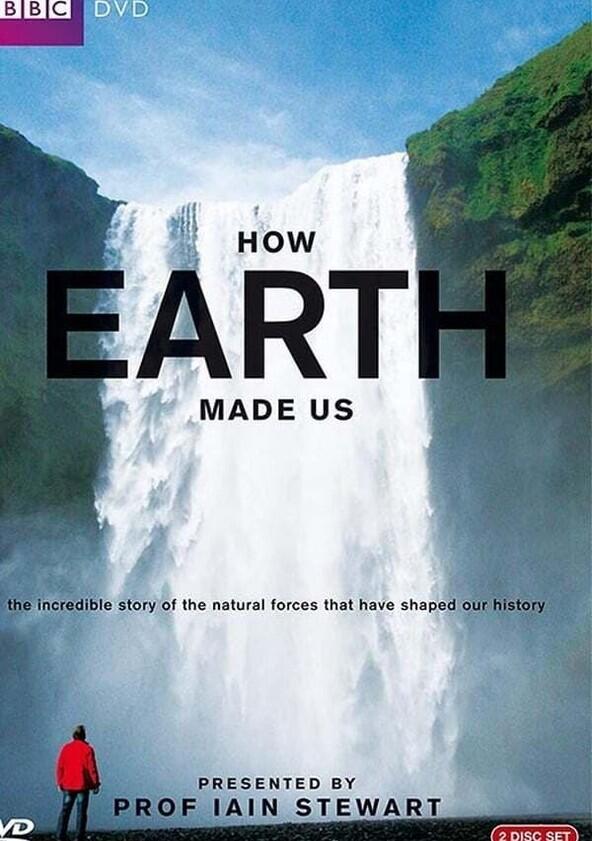
Season 1

Episodes
Deep Earth
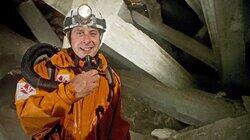
In this first episode, Iain explores the relationship between the deep Earth and the development of human civilisation. He visits an extraordinary crystal cave in Mexico, drops down a hole in the Iranian desert and crawls through 7,000-year-old tunnels in Israel.
His exploration reveals that throughout history, our ancestors were strangely drawn to fault lines, areas which connect the surface with the deep interior of the planet. These fault lines gave access to important resources, but also brought with them great danger.
Water
Professor Iain Stewart continues his epic exploration of how the planet has shaped human history.
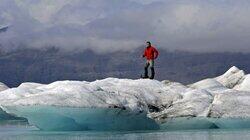
This time he explores our complex relationship with water. Visiting spectacular locations in Iceland, the Middle East and India, Iain shows how control over water has been central to human existence.
He takes a precarious flight in a motorised paraglider to experience the cycle of freshwater that we depend on, discovers how villagers in the foothills of the Himalayas have built a living bridge to cope with the monsoon, and visits Egypt to reveal the secret of the pharaohs' success.
Throughout history, success has depended on our ability to adapt to and control constantly shifting sources of water.
Wind
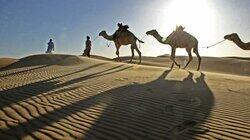
Iain sets sail on one of the fastest racing boats ever built to explore the story of our turbulent relationship with the wind. Travelling to iconic locations including the Sahara desert, the coast of west Africa and the South Pacific, Iain discovers how people have exploited the power of the wind for thousands of years.
The wind is a force which at first sight appears chaotic. But the patterns that lie within the atmosphere have shaped the destiny of continents, and lie at the heart of some of the greatest turning points in human history.

Fire
Iain explores man's relationship with fire. He begins by embarking on an extraordinary encounter with this terrifying force of nature - a walk right through the heart of a raging fire.
Fire has long been our main source of energy, and Iain shows how this meant that the planet played a crucial role in Britain's industrial revolution, whilst holding China's development back.
Along the way he dives in a mysterious lake in Oregon, climbs a glacier of salt, crawls through an extraordinary cave in Iran and takes a therapeutic bath in crude oil.
Human Planet
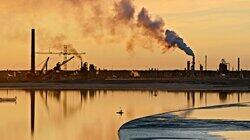
Professor Iain Stewart explores the most recently established force - humans. It's easy to think of the human impact on the planet as a negative one, but as Iain discovers, this isn't always the case. It is clear that humans have unprecedented control over many of the planet's geological cycles. The question is, how will the human race use this power?
Recently Updated Shows

Doc
Doc centers on the hard-charging, brilliant Dr. Amy Larsen, Chief of Internal and Family Medicine at Westside Hospital in Minneapolis. After a brain injury erases the last eight years of her life, Amy must navigate an unfamiliar world where she has no recollection of patients she's treated, colleagues she's crossed, the soulmate she divorced, the man she now loves and the tragedy that caused her to push everyone away. She can rely only on her estranged 17-year-old daughter, whom she remembers as a 9-year-old, and a handful of devoted friends, as she struggles to continue practicing medicine, despite having lost nearly a decade of knowledge and experience.


Dark Matter
Hailed as one of the best sci-fi novels of the decade, Dark Matter is a story about the road not taken. The series follows Jason Dessen, a physicist, professor, and family man who – one night while walking home on the streets of Chicago – is abducted into an alternate version of his life. Wonder quickly turns to nightmare when he tries to return to his reality amid the multiverse of lives he could have lived. In this labyrinth of mind-bending realities, he embarks on a harrowing journey to get back to his true family and save them from the most terrifying, unbeatable foe imaginable: himself.

