Our Changing Planet - Season 2

Season 2

Episodes
Episode 1
The second year of the BBC's ambitious, seven-year, natural history project sees six presenters visit six of the planet's most threatened ecosystems to meet the people fighting to restore the earth's delicate balance and adapt to the changes that have already taken place.
In this first episode, we travel to three locations with presenters Steve Backshall, Liz Bonnin and Chris Packham.
Steve Backshall visits the Maldives, a country facing significant challenges because of climate change. Warming seas and the acidification of the oceans have led to coral bleaching on a massive scale. And increasingly unpredictable weather patterns could deal the final blow. 2022 saw the first mass coral bleaching during La Niña, a climate pattern that historically keeps oceans cool enough to avoid bleaching. The earth's reefs are now at a tipping point. But these extreme challenges are galvanising the science community to get out of their labs and into the field, experimenting with more novel and innovative techniques, trialling ideas that could just make a difference.
Steve returns to Laamu Atoll to find out about one such cutting-edge project. Professor Steve Simpson and his team from Bristol University have identified that coral larvae, baby corals no bigger than a pinhead, move towards the sound of a healthy reef, a response that guides them to settle amongst a more biodiverse and healthier habitat, and in so doing, add to the coral population. Steve dives with Professor Simpson and records the sound of a healthy reef. With the help of a 360-degree camera, they are able to identify key marine life that make up these coral playlists.
Liz Bonnin returns to California to investigate some surprising solutions for the relentless onslaught of the state's wildfire season. California's wildfires are becoming a yearly catastrophe, with the state government spending billions of dollars in the last five years to fight these out-of-control blazes. Liz discovers that ancient forest management techniques and the beaver, a misunderstood mammal, could help prevent them in the first place, providing powerful tools to sustainably protect our planet against the ravages of climate change.
Liz visits the traditional reservation of the indigenous Tule River tribe, who have been practising a technique called ‘controlled burning' for thousands of years. By regularly burning the twigs and leaf litter that collect on the forest floor, they reduce the amount of material that typically collects in forests and fuels megablazes. Liz joins the tribe on one of their cultural burns and finds out how they have protected their land and, importantly, their sacred sequoia trees.
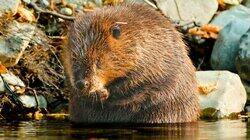
To prevent the fires from moving at speed across the landscape, scientists and indigenous communities are hoping that beavers can help solve the problem. Once found across North America, by 1900 beavers had been hunted virtually to extinction. Liz joins scientist Dr Emily Fairfax, who has been studying the benefits of introducing beavers into a landscape. Surrounded by burnt-out forest, a green oasis sits at it centre, the territory of a beaver family that has created what Emily describes as a ‘speed bump' for wildfires.
Chris Packham is in Greenland to learn more about the effects of global warming and the rate at which snow and ice are melting and retreating in the Arctic. He travels to a science research station on the island's remote north east coast, one of the most important locations in the world for the understanding of warming in the Arctic and its global impact. Chris joins an Arctic expedition as scientists from Aarhus University and Copenhagen Zoo track across the snow-covered tundra in search of musk oxen, an ice age survivor that can tolerate temperatures ranging from - 40 to +10 degrees Celsius.
With the gradual warming of the Arctic, future conditions may not resemble anything the species has ever encountered. Now moving slowly northwards as temperatures rise, there are many questions to be answered: will populations become vulnerable to warm weather disease? How long will they have a territory that's cold enough for them to survive in? And what will they leave behind them? The conditions are gruelling. Chris and the team have to move fast across the vast landscape, hoping to dart and collar 21 of these huge, powerful creatures, taking hair, blood and stomach samples. We learn how the sophisticated collars and an array of science techniques will be able to tell us if they breed, feed, survive or perish in the years to come.
Episode 2
In this second programme we join another three presenters as they celebrate the experts and communities fighting to rebalance another trio of vulnerable habitats, Gordon Buchanan returns to Brazil, Ella Al-Shamahi to Cambodia and Ade Adepitan to Kenya.
Gordon Buchanan returns to Brazil. Covering almost half of South America, it's the most biodiverse country on our planet and as well as the Amazon Rainforest, it's home to one of the world's most important wetlands, the Pantanal. Gordon's here to revisit a pioneering project that's committed to saving one of the Amazon's iconic predators – the jaguar, and to understand the importance of a healthy ecosystem.
On the other side of the world Ella Al-Shamahi returns to Cambodia in Southeast Asia, an area experiencing increasing economic growth. But the growth is putting massive pressure on the natural resources and is leading to expanding cities and potentially devastating over-exploitation of the natural world.
Biodiversity plays a vital role in building resilience in these threatened landscapes and every species is critical. Ella joins an expedition which will reintroduce the nearly extinct Siamese crocodile into the depths of the Cardamom Mountains. To date, the survival of these critically endangered crocs has been down to the cultural connection between the local people and the crocs who they consider sacred.
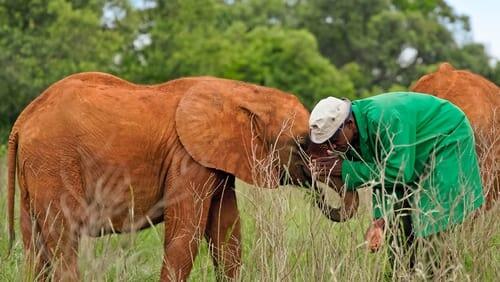
When Ade visited Kenya in 2021 the elephants were being severely affected by drought but 2022 saw a new and sinister problem; people and elephants now fighting over dwindling food and water supplies, even killing each other in the desperation to survive. This is the new scourge - human elephant conflict.
But Ade finds out about an ingenious project that could help farmers and elephants to co-exist until the next rains finally arrive. Using biology and behavioural science, leading elephant scientists with the input of locals, have created affordable tools for repelling elephants from farms and reducing conflict.
Recently Updated Shows
True Detective
Touch darkness and darkness touches you back. True Detective centers on troubled cops and the investigations that drive them to the edge. Each season features a new cast and a new case.
True Detective is an American anthology crime drama television series created and written by Nic Pizzolatto.

Shōgun
Shōgun is set in Japan in the year 1600 at the dawn of a century-defining civil war. Lord Yoshii Toranaga is fighting for his life as his enemies on the Council of Regents unite against him, when a mysterious European ship is found marooned in a nearby fishing village.

The Morning Show
Nominated for three Golden Globes®, this unapologetically candid drama looks at the modern workplace through the lens of the people who help America wake up. Pull back the curtain on early morning TV.

The Grand Tour
Jeremy Clarkson, Richard Hammond and James May are back with The Grand Tour. A show about adventure, excitement and friendship... as long as you accept that the people you call friends are also the ones you find extremely annoying. Sometimes it's even a show about cars. Follow them on their global adventure.

Survivor
Eighteen to twenty castaways will compete against each other on Survivor. All castaways will compete to outwit, outplay, outlast and ultimately be crowned Sole Survivor.