The Incredible Human Journey - Season 1
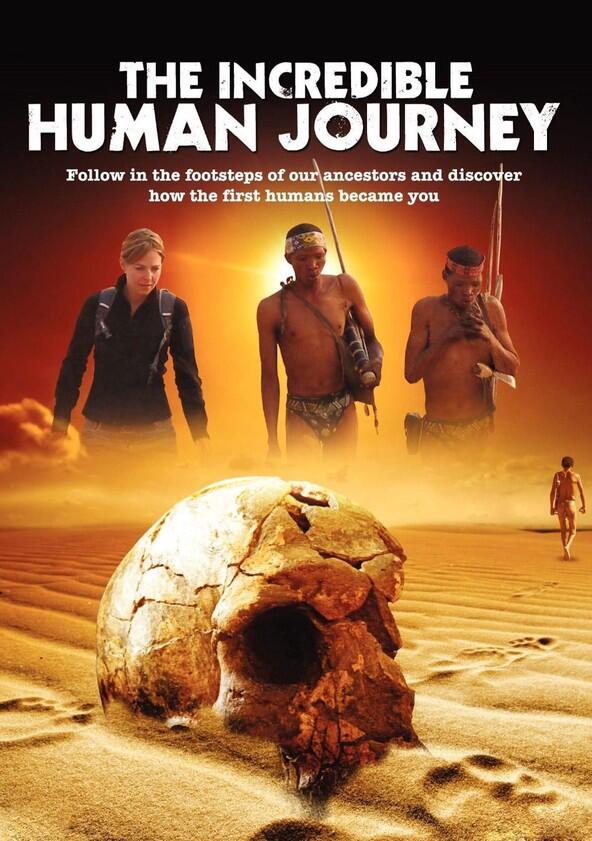
Season 1

Episodes
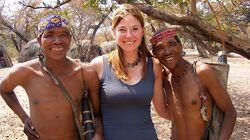
Out of Africa
Alice travels to Africa in search of the birthplace of the first people. They were so few in number and so vulnerable that today they would probably be considered an endangered species. So what allowed them to survive at all? The Bushmen of the Kalahari have some answers - the unique design of the human body made them efficient hunters and the ancient click language of the Bushmen points to an early ability to organise and plan.
Humans survived there, but Africa was to all intents and purposes a sealed continent. So how and by what route did humans make it out of Africa? Astonishing genetic evidence reveals that everyone alive today who is not African descends from just one successful, tiny group which left the continent in a single crossing, an event that may have happened around 70 thousand years ago. But how did they do it? Alice goes searching for clues in the remote Arabian Desert.
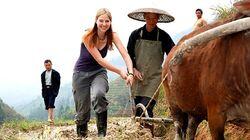
Asia
In this programme, the journey continues into Asia, the world's greatest land mass, in a quest to discover how early hunter-gatherers managed to survive in one of the most inhospitable places on earth - the Arctic region of northern Siberia. Alice meets the nomadic Evenki people, whose lives are dictated by reindeer, both wild and domesticated, and discovers that the survival techniques of this very ancient people have been passed down through generations. Alice also explores what may have occurred during human migration to produce Chinese physical characteristics, and considers a controversial claim about Chinese evolution: that the Chinese do not share the same African ancestry as other peoples.
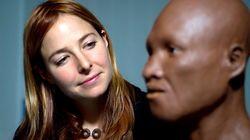
Europe
When our species first arrived in Europe, the peak of the Ice Age was approaching and the continent was already crawling with a rival: stronger, at home in the cold and even (contrary to the popular image) brainier than us. So how did the European pioneers survive first the Neanderthals and then the deep freeze as they pushed across the continent?
Alice Roberts reconstructs the head of the 'first European' to come face to face with one of our ancestors; she discovers how art became crucial for survival in the face of Neanderthal competition; and what happened to change the skin colour of these European pioneers.
Finally, spectacular new finds on the edge of Europe suggest that the first known temples may have been a spark for a huge revolution in our ancestors' way of life - agriculture.

Australia
Alice looks at our ancestors' seemingly impossible journey to Australia. Miraculously preserved footprints and very old human fossils buried in the outback suggest a mystery: that humans reached Australia almost before anywhere else. How could they have travelled so far from Africa, crossing the open sea on the way, and do it thousands of years before they made it to Europe?
The evidence trail is faint and difficult to pick up, but Alice takes on the challenge. In India, new discoveries among the debris of a super volcano hint that our species started the journey much earlier than previously thought, while in Malaysia, genetics points to an ancient trail still detectable in the DNA of tribes today.
Alice travels deep into the Asian rainforests in search of the first cavemen of Borneo and tests out a Stone Age raft to see whether sea travel would have been possible thousands of years ago, before coming to a powerful conclusion.

The Americas
For Stone Age people, reaching North and South America seems impossible - on each side vast oceans, and to the north an impenetrable ice sheet that covered the whole of Canada. So how did the first Americans get there?
Dr Alice Roberts discovers evidence for an ancient corridor through the Canadian ice sheet that may have allowed those first people through. But there are problems - in particular some very ancient finds in southern Chile seem to suggest a very different way in to the Americas. Amazingly, an ancient human skull discovered in Brazil even points to an Australasian origin of the Americans. Could a route from Australia across the Pacific have been possible? A surprising answer to the problem eventually comes from a Canadian forensic scientist more used to solving murder cases.
Recently Updated Shows
Survivor
Eighteen to twenty castaways will compete against each other on Survivor. All castaways will compete to outwit, outplay, outlast and ultimately be crowned Sole Survivor.

Last Week Tonight with John Oliver
On Last Week Tonight with John Oliver, John Oliver presents a satirical look at the week in news, politics and current events.

Lioness
Lioness, inspired by an actual U.S. Military program, follows the life of Joe while she attempts to balance her personal and professional life as the tip of the CIA's spear in the war on terror. The Lioness Program, overseen by Kaitlyn Meade and Donald Westfield, enlists an aggressive Marine Raider named Cruz to operate undercover alongside Joe among the power brokers of State terrorism in the CIA's efforts to thwart the next 9/11.

Doc
Doc centers on the hard-charging, brilliant Dr. Amy Larsen, Chief of Internal and Family Medicine at Westside Hospital in Minneapolis. After a brain injury erases the last eight years of her life, Amy must navigate an unfamiliar world where she has no recollection of patients she's treated, colleagues she's crossed, the soulmate she divorced, the man she now loves and the tragedy that caused her to push everyone away. She can rely only on her estranged 17-year-old daughter, whom she remembers as a 9-year-old, and a handful of devoted friends, as she struggles to continue practicing medicine, despite having lost nearly a decade of knowledge and experience.

Dark Matter
Hailed as one of the best sci-fi novels of the decade, Dark Matter is a story about the road not taken. The series follows Jason Dessen, a physicist, professor, and family man who – one night while walking home on the streets of Chicago – is abducted into an alternate version of his life. Wonder quickly turns to nightmare when he tries to return to his reality amid the multiverse of lives he could have lived. In this labyrinth of mind-bending realities, he embarks on a harrowing journey to get back to his true family and save them from the most terrifying, unbeatable foe imaginable: himself.